
The idea of communicating with the dead is not new, but the distinct modern movement called Spiritualism was popularized in the mid-19th century in America before expanding to Europe.

This article is from the “Relatively Speaking” Genealogy E-news. Sign up for tips for genealogists and in-depth information on library resources and programs.
iNTRODUCTION TO SPIRITUALISM: A 19th CENTURY MOVEMENT
October 2025 | By Shannan E.
For anyone new to the historical context of the Spiritualism movement, we want to offer a brief introduction.
The idea of communicating with the dead is not new, but the distinct modern movement called Spiritualism was popularized in the mid-19th Century in America before expanding to Europe. It touted a way to interact with past loved ones or even famous people who had departed. These interactions were led by a medium through séances where various paranormal phenomena could occur, such as levitations, speaking through the medium, ghostly apparitions, ectoplasm and more.
Beginnings
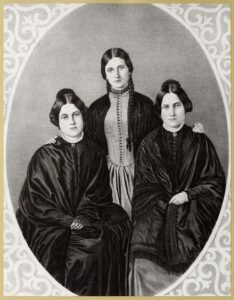
Spiritualism’s start is often linked to a specific supernatural occurrence at a New York home in 1848. Three young women, later infamously called the Fox Sisters, were involved with communicating with a spirit through phantom knocks. They then traveled the world sharing their spiritual abilities. Years later one of the sisters came out stating that they were just cracking their toes, but there was not a complete consensus between the sisters on this fact.
In a 2019 White House Historical Association article, they highlight a connection between the rise of Spiritualism and the uncertainty and loss of life during the American Civil War (1861-1865). The article mentions that by 1897, the movement had spread across America and Europe to more than eight million people. Additionally, according to the Association of Religion Data Archives, the oldest and largest of the Spiritualist churches was formed in 1893 in Chicago. For more information on Chicago’s involvement, read the DNAinfo.com 2015 article.
Surprising Characters
There are a lot of surprising characters that were involved in the Spiritualism movement. One notable figure was Sir Arther Conan Doyle, a British doctor and author of the Sherlock Holmes books, who was a fervent believer. He wrote articles, books and participated in traveling lectures on the subject. The Arthur Conan Doyle Encyclopedia has full texts of these books and more. Other famous believers included First Lady Mary Lincoln who held séances at the White House and Thomas Edison, who tried to invent the Spirit Phone, though he was critical of most mediums.
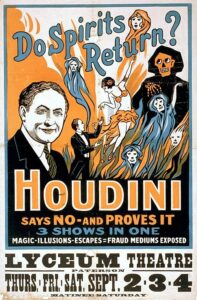
A notable figure in the opposition was Harry Houdini, a famous magician. He spent his later years fighting against Spiritualism by denouncing them as magic tricks stating, “it takes a flim-flammer to catch a flim-flammer.” In 1926, he even unsuccessfully campaigned to criminalize the practice. A 2015 book, called The Witch of Lime Street: Séance, Seduction, and Houdini in the Spirit World follows his efforts. The book can be requested through our consortium. Houdini also made a pact with his wife that after his passing, if Spiritualism was real, he would contact her from beyond the grave. After a decade of séances to test their pact, she gave up.
Debunking
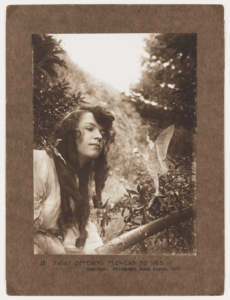
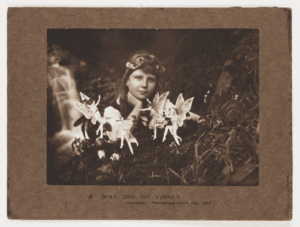
The Fox sisters were not the only mediums to later publicly state that they were faking their abilities. Another infamous example is the Cottingley Fairies photographs (1917), which were widely publicized by many, including Conan Doyle, as proving the existence of fairies. It later came out that the individuals involved had edited the photos. In 1983 one of the individuals in an interview with BBC stated “…It was just Elsie and I having a bit of fun…I can’t understand to this day why people were taken in. They wanted to be taken in.” The photographs and the cameras are in the National Science and Media Museum in Bradford, England. For more information, the museum wrote a blog, which includes artifacts from the incident.
 |
 |
Final Thoughts
While the interest in this movement has lessened in the 21st Century, the historical context and practices still fascinate people to this day. Later this month, the Chicago History Museum is hosting a walking tour on Chicago Spiritualism. For more Halloween related articles, visit the previous October newsletter editions of Relatively Speaking, including Illinois Ghost Stories and the Irish Origins of Halloween.
RESOURCES
•Arthur Conan Doyle Encyclopedia
•Association of Religion Data Archives’ webpage on National Spiritualist Association of Churches
•Britannica Spiritualism webpage
•Can We Talk To The Dead? South Siders Led Movement That Believed We Could – Dna.Info (October 23, 2015)
•Cottingley Fairies: How Sherlock Holmes’s Creator Was Fooled By Hoax – BBC (December 4, 2020)
•Dial-a-Ghost On Thomas Edison’s Least Successful Invention: the Spirit Phone – Atlas Obscura (October 18, 2016)
•For Harry Houdini, Séances And Spiritualism Were Just an Illusion – Smithsonian Magazine (October 28, 2021)
•The Story of the Cottingley Fairies Shows That Image Manipulation is Nothing New – National Science and Media Museum article (July 29 2012)
•Séances In The Red Room: How Spiritualism Comforted The Nation During And After The Civil War – The White House Historical Association (April 24, 2019)
•Spirit Photography And The Occult: Making The Invisible Visible – National Science and Media Museum (February 10, 2022)
Made in Chicago: Stories Behind 30 Great Hometown Bites
by Monica Eng and David Hammond

“Italian beef and hot dogs get the headlines.” Cutting-edge cuisine and big-name chefs get the Michelin stars. But Chicago food shows its true depth in classic dishes conceived in the kitchens of immigrant innovators, neighborhood entrepreneurs, and mom-and-pop visionaries.
Monica Eng and David Hammond draw on decades of exploring the city’s food landscape to serve up thirty can’t-miss eats found in all corners of Chicago. From Mild Sauce to the Jibarito and from Taffy Grapes to Steak and Lemonade, Eng and Hammond present stories of the people and places behind each dish while illuminating how these local favorites reflect the multifaceted history of the city and the people who live there.
Each entry provides all the information you need to track down whatever sounds good and selected recipes even let you prepare your own Flaming Saganaki or Akutagawa. Generously illustrated with full-color photos, Made in Chicago provides locals and visitors alike with loving profiles of a great food city’s defining dishes
-Provided by the publisher
October activities
As part of Halloween and Family History Month, we are offering a passive activity called Photo Detective Quest. The activity is first come first serve.
The Photo Detective Quest logbook will be available from Monday, October 13-Monday, October 27. The logbook is located on the second floor display in Adult Services. In the logbook, you’ll find a list of 10 historically significant locations within the Indian Trails Public Library District.
To participate, recognize 5 locations to receive a prize. Return the completed guide to the Adult Services Desk at the main library through Friday, October 31 to pick up a completion prize.